
Recipes · All Recipes — A to Z
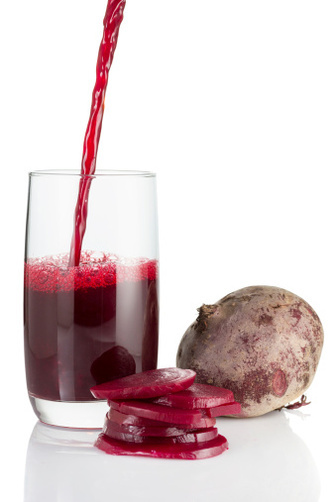
Ingredients:
Organic Beets (peeled and chopped into 2 to 3 inch cubes)Brine: (2% brine [20 grams per liter of filtered water])
Optional: Ginger (peeled and sliced into 1" pieces)
1/8 teaspoon or less cayenne (optional, added after primary fermentation)
Important tips:
Fresh beets should be large and detached from greens for at least a week to concentrate the sugars.
Try to choose beets that are at least the size of your fist.
Make sure the beets are not cut too small, or they will ferment too quickly.
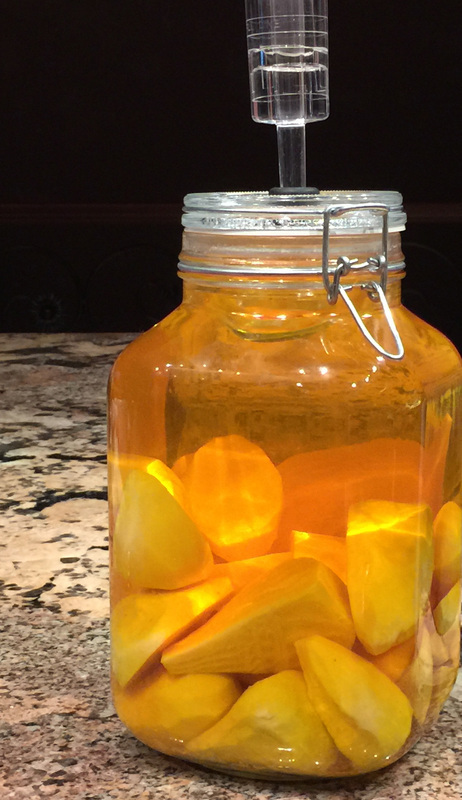
Vary the color and flavor of the final kvass by choosing different varieties of beets. Golden beets result in a beautiful orange tonic, Chioggia or striped pink/white results in a light pink tonic, and the traditional purple beets results in a deep wine colored tonic. The chiogga and the golden beets are milder in flavor or less "beety". They're all delicious!
Primary Fermentation
The key is to fill the jar approximately three-fifths full of chopped beets—more than halfway but less than two-thirds full.
- Place clean, peeled chopped beets into The Probiotic Jar, filling it approximately three-fifths full—more than halfway but less than two-thirds full.
- Add a few 1 inch chunks of peeled ginger.
- Make a 2% brine. Dissolve salt completely.
- Add 2% brine to just below the neck of the jar. Float the Brine (Submersion) Bowl on top of the brine. Add airlock with water. Ferment away from direct light at room temperature.
- Ferment at 68–78°F, with 68–72°F preferred, for 7 to 9 days. You may see bubbles forming on the top. This indicates active cultures are thriving. Taste after several days. Mine usually takes at least 8 days, maybe longer in cooler weather.
- It should not taste like salty water.
Salty tasting ~ keep going with the primary fermentation.
Not salty tasting ~ then proceed to the second fermentation or drink as is. I prefer the deep rich flavor that comes with the second ferment.
Secondary Fermentation (for fizz and depth)
Strain the beets and/or ginger and add the juice to a flip-top glass bottle. (Caution: Placing any fermenting food or liquid into a pressure building bottle has the potential to break the bottle if the conditions are just right and the glass is weak. Therefore, it may be advisable to burp the jar to prevent excessive pressure buildup.)
Optional: Add less than 1/8 teaspoon cayenne or another flavor listed below, seal and let it ferment for several more days at room temperature ~ even weeks. If it tastes good, then go ahead and move it to the fridge ~ it gets better over time. It will become richer, deeper in flavor, and perhaps fizzier. Some of my best kvass is several months old! I prefer to drink it cold.
More Flavors: Try adding other herbs such as rosemary, turmeric, or even lavender during the second fermentation. Feel free to experiment!
Beet kvass is known for several health enhancing properties. Anything a beetroot can do, beet kvass does better! We keep this tonic on hand and enjoy a glass of it every day.
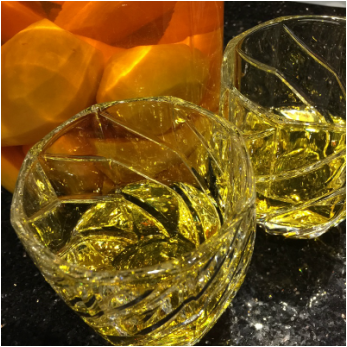
Beet Kvass from Golden Beets. Just a delicious, light flavor. Each variety of beets offers it's own unique flavor and health benefit profile.
|
|
Beet Quantity and Flavor
Using too few beets and too much brine can produce little more than salty pink liquid instead of richly flavored beet kvass.
Temperature for Kvass
For the countertop phase, use 68–78°F, with 68–72°F preferred. Kvass tolerates this warmer range because it is a beverage rather than a vegetable ferment where crisp texture is the primary objective.
Carbonation & Bottle Safety
Sealing a ferment to create fizz can build dangerous pressure, even during refrigeration. Use only bottles specifically designed for carbonation. Excessive pressure can break even pressure-rated bottles and cause serious injury.
Read moreRead less
If you want carbonation, transfer finished kvass to clean bottles specifically rated for carbonation. Ferment and store the kvass under the Airlock in the Probiotic Jar.
- Carbon dioxide is produced during fermentation. The Probiotic Jar’s Airlock allows gas to escape and is not intended for producing carbonation. Do not use the Stopper to deliberately trap gas and create fizz in the Probiotic Jar.
- Use clean bottles specifically designed for carbonation. Avoid ordinary bottles and jars that are not designed for carbonation.
- Do not overfill carbonation bottles or leave them sealed indefinitely while fermentation continues. Pressure can continue accumulating under refrigeration, and even pressure-rated bottles can fail if pressure becomes excessive.
- Place sealed carbonation bottles in a sturdy, covered secondary container in the refrigerator as an additional precaution. It may provide an additional barrier, but it cannot guarantee containment of broken glass or protection from injury.
Learn more about actual incidents of exploding glass:
Scientific background
Colorado State University Extension — Understanding and Making Kombucha