
Recipes · All Recipes — A to Z
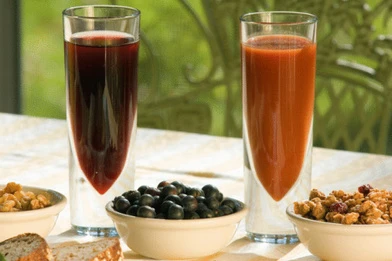
This recipe is adapted from Linda Cox of Bread to Perfection in North Canton, OH. Used by permission. Thank you, Linda!
25 g ginger ~ chopped into 1" pieces
250 g fresh cabbage ~ finely shredded
100 g coarsely chopped Kale
500 g cubed beets
Jar: 3 Liter Jar
Brine: 2%
Ferment: 7–9 days on the countertop; then approximately 12 weeks refrigerated, OR at least 6 weeks at 55°F or cooler
Ingredients:
25 g ginger ~ chopped into 1" pieces
250 g fresh cabbage ~ finely shredded
100 g coarsely chopped Kale
500 g cubed beets
Jar: 3 Liter Jar
Brine: 2%
Ferment: 7–9 days on the countertop; then approximately 12 weeks refrigerated, OR at least 6 weeks at 55°F or cooler
Preparation:
- Place prepared vegetables in the Jar.
- Add 2% (completely dissolved) brine to just below the neck.
- Place Brine (Submersion) Bowl afloat on top of the brine.
- Lock the Lid, fill & place the Airlock.
- Place in a dark spot wrapped with a kitchen towel for 7–9 days at 68–78°F, with 68–72°F preferred.
- Move kvass to the refrigerator and leave to ferment there for approximately 12 weeks, OR use cool storage at 55°F or cooler for at least 6 weeks.
- Strain kvass and store in Probiotic Jar with Airlock while using.
This recipe looks so good! I can't wait for these vegetables to be in season in Alaska so that I can try it! Pressure is known to harm LAB and slow their production.
Temperature for Kvass
For the countertop phase, use 68–78°F, with 68–72°F preferred. Kvass tolerates this warmer range because it is a beverage rather than a vegetable ferment where crisp texture is the primary objective.
Carbonation & Bottle Safety
Sealing a ferment to create fizz can build dangerous pressure, even during refrigeration. Use only bottles specifically designed for carbonation. Excessive pressure can break even pressure-rated bottles and cause serious injury.
Read moreRead less
If you want carbonation, transfer finished kvass to clean bottles specifically rated for carbonation. Ferment and store the kvass under the Airlock in the Probiotic Jar.
- Carbon dioxide is produced during fermentation. The Probiotic Jar’s Airlock allows gas to escape and is not intended for producing carbonation. Do not use the Stopper to deliberately trap gas and create fizz in the Probiotic Jar.
- Use clean bottles specifically designed for carbonation. Avoid ordinary bottles and jars that are not designed for carbonation.
- Do not overfill carbonation bottles or leave them sealed indefinitely while fermentation continues. Pressure can continue accumulating under refrigeration, and even pressure-rated bottles can fail if pressure becomes excessive.
- Place sealed carbonation bottles in a sturdy, covered secondary container in the refrigerator as an additional precaution. It may provide an additional barrier, but it cannot guarantee containment of broken glass or protection from injury.
Learn more about actual incidents of exploding glass:
Scientific background
Colorado State University Extension — Understanding and Making Kombucha