
Recipes · All Recipes — A to Z
Ingredients:
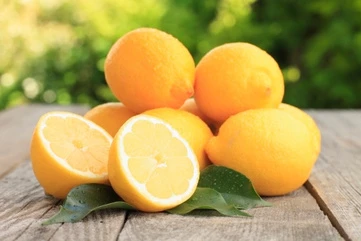
12 organic lemons*
1/2 Cup Himalayan Pink Salt**
Jar: 1 Liter Jar (or double the recipe in a 2 Liter Jar)
Brine: None
Ferment: 14 days at room temperature (68–72°F), followed by refrigeration
Preparation:
- Thoroughly wash the lemons.
- Trim the ends off the lemons; that is where much citrus mold originates.
- Quarter five of the lemons lengthwise (cut in half end-to end, and again cut end to end, creating quarters).
- Toss the lemons in the salt, and place in the jar, packing snugly.
- Be sure to leave enough space for the Brine Bowl.
- Quarter one more lemon at a time until the Jar is packed to a little below the shoulder, checking space for the Brine Bowl and closure of the Jar.
- Pour remaining salt on top of the lemons in the Jar.
- Juice the remaining lemons and pour the juice over the lemons, washing the salt down into the Jar, filling almost to the neck to leave little head space in the Jar, and just enough space to float the Brine Bowl.
- Discard the juiced lemon rinds.
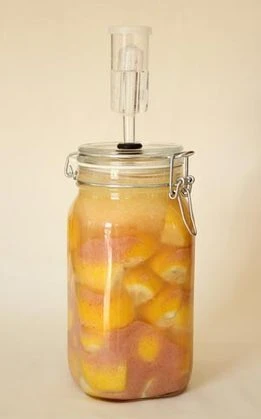
- Place the Brine Bowl, close the Probiotic Jar, fill the Airlock with 2 TBS. water, and twist the Airlock into the grommet.
- Leave the lemons at 68–72°F for 14 days, then move to refrigeration for use and storage. They begin to be ready for use at approximately three months and may continue developing flavor with additional aging.
- Preserved lemons generally produce much less gas than vigorously fermenting vegetables because they are primarily salt-cured. Stopper use may be an option when the lemons are accessed frequently, but pressure can accumulate during sealed storage. Leaving the Airlock in place remains the preferred practice and avoids this concern. The Stopper should not be relied on as a pressure-relief device.
Organic lemons are absolutely necessary because they do not have wax on their skins. Lemons with waxed skins will not ferment.
**Preserving/Lacto-fermenting lemons is a little different than a vegetable; they already have high acid, and we're using such a high salt content that very little LAB activity is going to take place, and at a much slower pace. The spoiling microorganisms on lemons are very hardy and low pH resistant, and such a high salt content is necessary to prevent spoilage, even in The Probiotic Jar.
Since the salt content is so high, and the LAB activity so low, we aren't going to consider this a "healing" food, but it sure is good! There seems to be enough LAB that when the brine and flesh of these lemons are added to other foods such as lacto-fermented mayonnaise or Ranch Dressing the shelf life of those foods is considerably extended. Deliciously!
About Salt-Curing Lemons
Preserved lemons are primarily salt-cured rather than conventional lactic-acid vegetable ferments. Their natural acidity and substantial salt are the primary preserving factors. Some microbial fermentation may occur, but it is not the principal preservation process.
University extension resources recommend different curing periods depending on their methods: Clemson describes two weeks before refrigeration, University of California Agriculture and Natural Resources describes two to four weeks at room temperature, and an Oregon Ask Extension response recommends refrigeration after the first few days. These are comparisons of different methods, not interchangeable instructions for this recipe.
In my own experience, I have used preserved lemons that had been refrigerated for over three years. That is my personal experience, not a guaranteed shelf life or a general storage recommendation.